

How to Understand Why Premium Automotive Tees Cost More
Last Updated: November 19, 2026
Quick Summary
Premium automotive tees cost more because heavier combed and ring-spun cotton, durable printing that survives oil and repeated washing, and small production batches all carry real costs a mass-market tee never touches. The price reflects fabric grade, construction, print method, and production volume rather than the logo.
- A lightweight promotional tee often lands in the 140-160 GSM range, while heavier retail-weight shirts run noticeably higher.
- Combed cotton removes shorter fibers and ring-spun cotton twists yarn tighter, so fabric resists pilling and holds its shape.
- Screen printing lays down heavy opaque ink, while DTG sprays water-based ink into fibers for finer detail and a softer hand.
- Check fabric weight, stitch density, neckline reinforcement, print edges, and side seams to judge a shirt in under a minute.
- Wash cold, inside out, and tumble low or hang dry to protect the print and fiber over years.
Table of Contents
- Why Premium Automotive Tees Cost More: The Real Cost Drivers
- Premium T-Shirt vs Classic T-Shirt: What Changes at the Checkout
- How to Identify High-Quality Graphic Tees Before You Buy
- The Automotive Apparel Care Guide: Making the Price Last
- Shop Corvette Tees Built for the Garage
- Frequently Asked Questions
Why Premium Automotive Tees Cost More: The Real Cost Drivers
A premium automotive tee can cost more because the fabric, the printing method, and the number of shirts produced all cost more before the design is even applied. At Billy's Garage, we field the same question constantly: why does one Corvette shirt cost two or three times another? The answer is rarely the logo. It's what sits underneath it.
Here's the short version. A shirt made from heavier combed and ring-spun cotton, printed with a process that survives oil, grease, and repeated washing, in a small batch tied to one Corvette generation, carries real costs a mass-market tee never touches. Below, we break down where that money actually goes, so you can judge a price tag instead of guessing at it.
Premium automotive tees are graphic t-shirts built for people who work on and live around cars, which means the fabric weight, stitch density, and ink durability all have to clear a higher bar than a fashion tee. That bar is the whole story behind the price.
Fabric Weight, Cotton Grade, and What GSM Tells You
GSM stands for grams per square meter, and it is the single fastest way to compare two shirts. A lightweight promotional tee often lands in the 140-160 GSM range, while a heavier retail-weight shirt runs noticeably higher. You can feel the difference in the hand before you ever read a label.
Fabric weight is only half of it. How the cotton is spun matters just as much. Combed cotton has shorter fibers removed; ring-spun cotton is twisted tighter for a smoother, stronger yarn. Put them together and you get fabric that resists pilling, holds its shape, and takes ink cleanly. Cheaper open-end cotton skips those steps, which is why budget tees feel coarse and thin out fast.
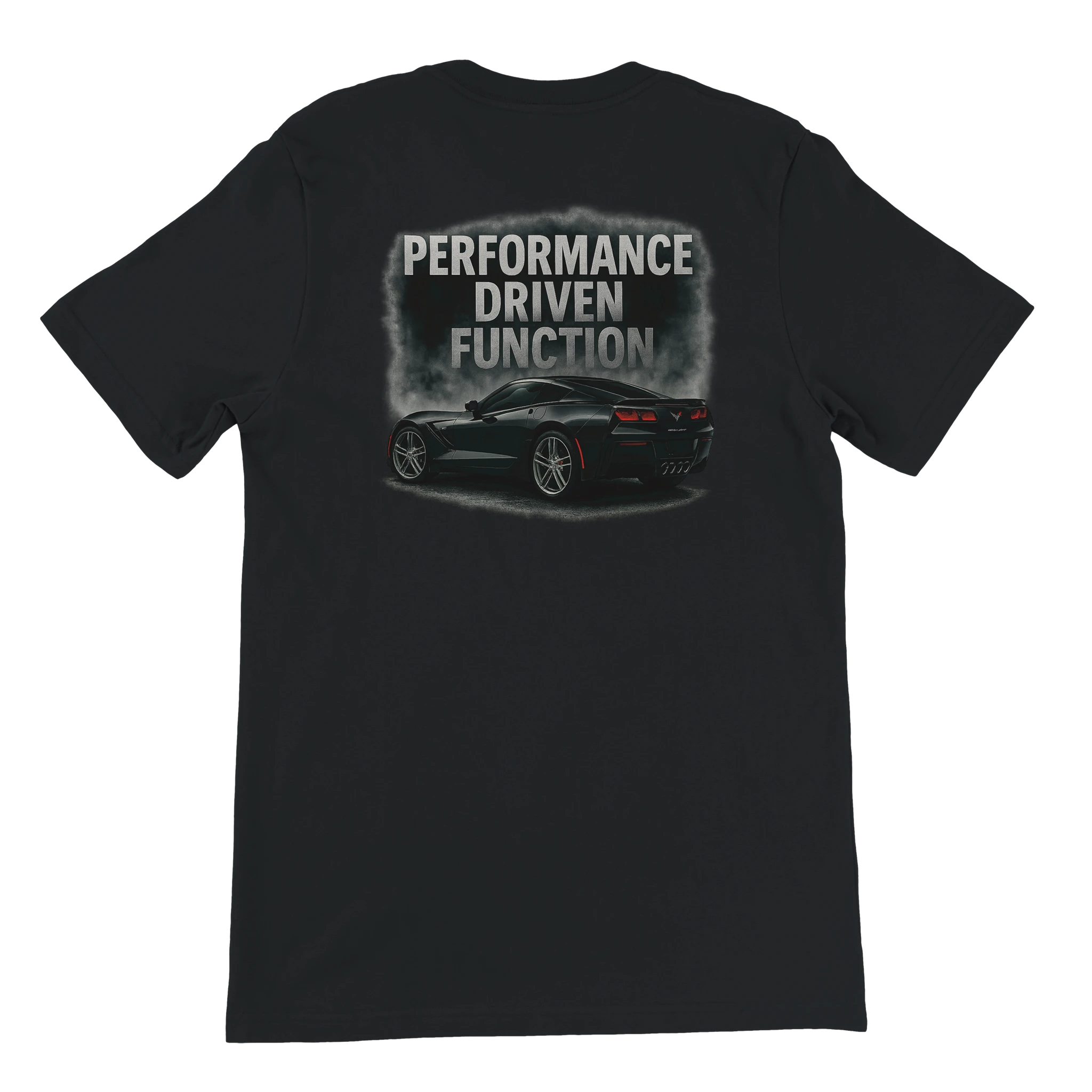
If you want to see what those specs look like in a finished shirt, our C7 Performance Driven Function premium unisex crewneck is built from 100% Airlume combed and ring-spun cotton on solid colors, with a side-seamed fit that holds its line.
Watch out: a shirt can advertise a high GSM and still feel rough if the cotton grade is low. Weight tells you density, not softness.
Printing Methods: Screen Printing, DTG, and Ink Durability
Screen printing pushes thick ink through a mesh stencil, laying down a heavy, opaque layer that handles high-density printing well. Direct-to-garment (DTG) printing sprays water-based ink directly into the fabric fibers, which gives finer detail and a softer hand. Neither is automatically better; they solve different problems.
For automotive apparel, durability is the deciding factor. A shirt worn in a garage meets oil, grease, brake dust, and hot washes.
This is the part most guides skip. A shirt printed for a photo shoot and a shirt printed to survive a timing chain job are not the same product, and the price difference usually lives right here.
Premium T-Shirt vs Classic T-Shirt: What Changes at the Checkout
The gap between a premium t-shirt and a classic t-shirt comes down to four things: fabric grade, construction, print method, and production volume. A classic tee is built to hit a price. A premium tee is built to last. Both are legitimate; you just need to know which one you're buying.
Here's how the two stack up on the details that actually affect how a shirt wears:
| Feature | Classic Tee | Premium Tee |
|---|---|---|
| Fabric | Lighter, open-end cotton | Heavier combed, ring-spun cotton |
| Construction | Standard seams | Side-seamed, reinforced neckline |
| Printing | Basic screen or transfer | High-density screen or quality DTG |
| Shrinkage | Often unwashed, shrinks | Pre-shrunk, holds size |
| Production | Huge volume, low cost per unit | Smaller batches, higher cost per unit |
| Longevity | Fades and thins quickly | Holds color and shape longer |
Production volume is the quiet driver.
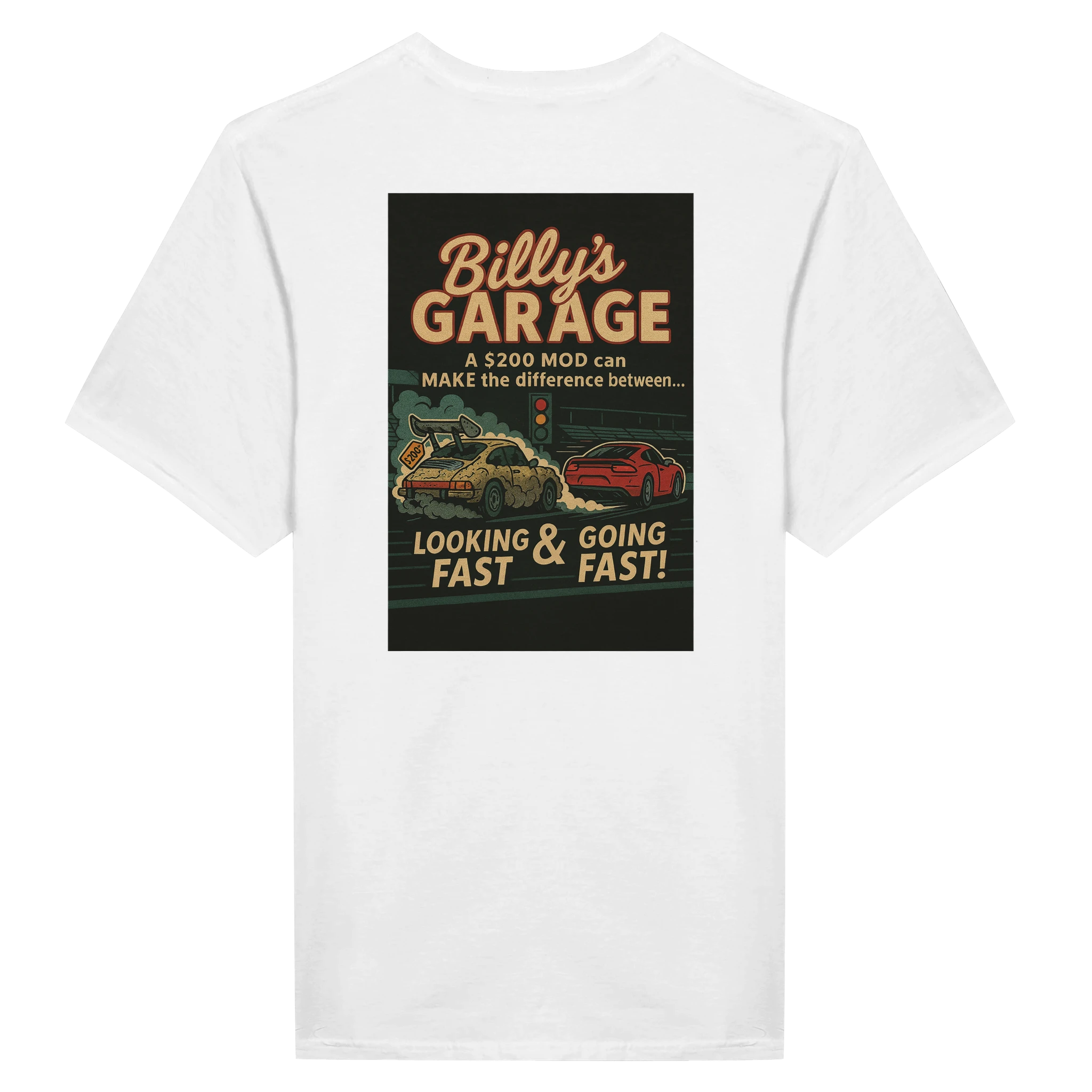
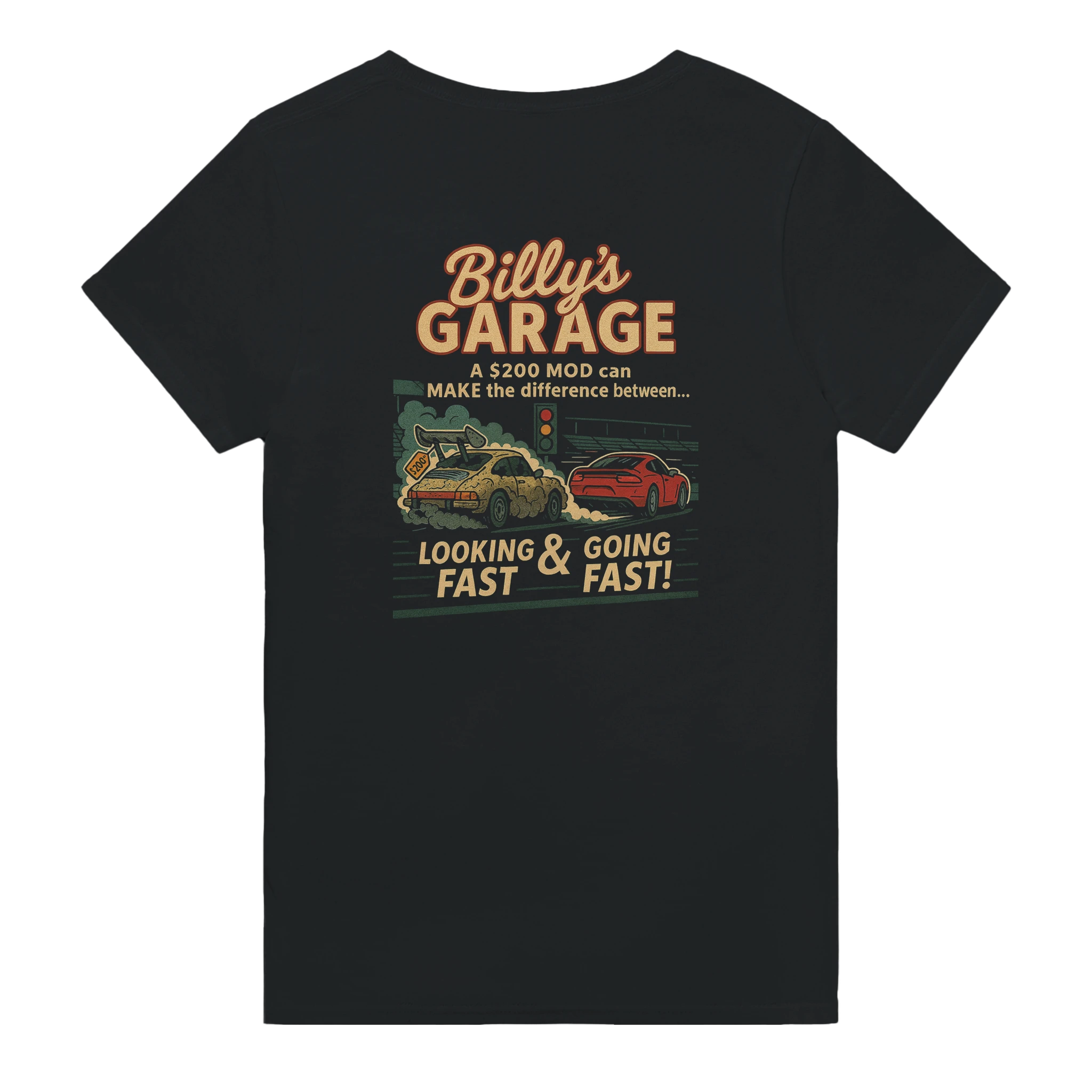
You can see the two ends of that spectrum in our own shop. The heavyweight "$200 Mod" crewneck sits at the premium end, while the classic-cut "$200 Mod" tee anchors the lighter, lower-cost side of the same design. Same joke, two builds, two prices.
How to Identify High-Quality Graphic Tees Before You Buy
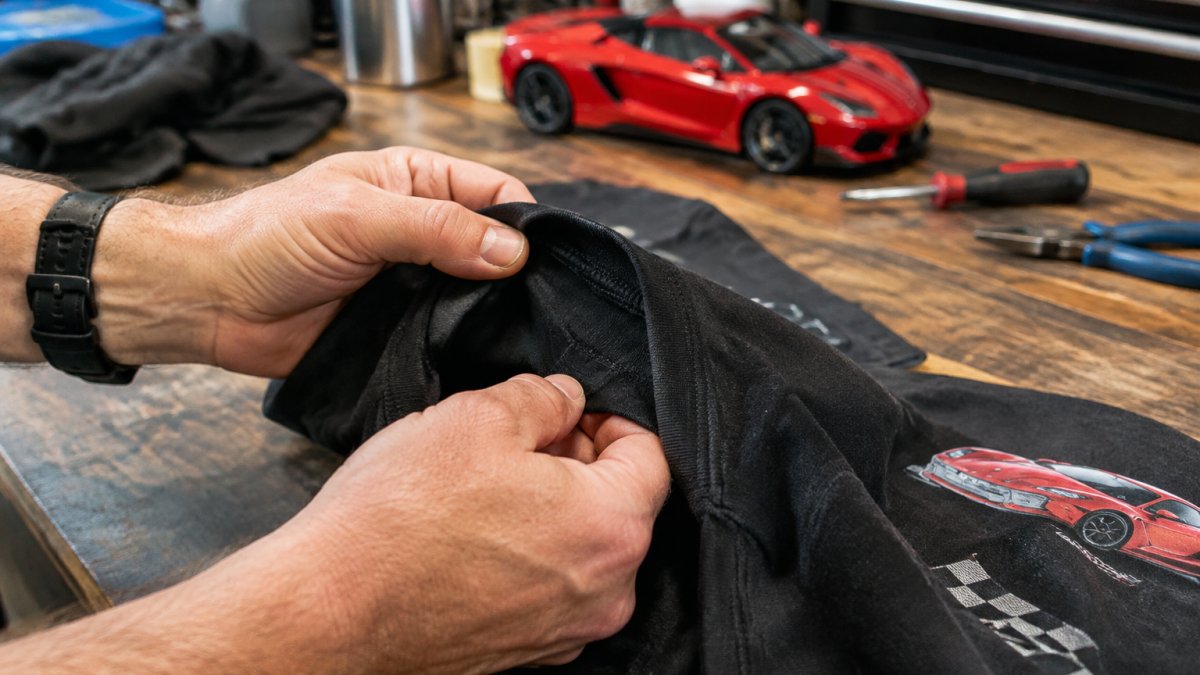
High-quality graphic tees reveal themselves in five places: fabric weight, stitch density, neckline reinforcement, print edges, and side-seam construction. Check those and you can judge a shirt in under a minute, in person or from a good product page.
Run this checklist before you commit:
- Fabric weight: does the listing state GSM or a fabric weight, or does it stay vague?
- Cotton grade: does it name combed or ring-spun cotton, or just "100% cotton"?
- Stitch density: are seams tight and even, with no loose or skipped stitches?
- Neckline: is the collar reinforced with taping or a double stitch so it won't stretch out?
- Print edges: are the ink edges crisp, or fuzzy and cracked before the first wash?
- Construction: is it side-seamed, or a cheap tubular cut that twists after washing?
- Shrinkage: does it say pre-shrunk, and is there a real size chart?
A common mistake is judging a shirt by the front graphic alone. Flip it inside out. The seams tell you more about longevity than the design ever will. If you want a deeper walkthrough of picking the right gear, our Corvette gear buyer's guide covers where and how to buy with confidence.
The Automotive Apparel Care Guide: Making the Price Last
An automotive apparel care guide boils down to one rule: protect the print and the fiber, and the shirt pays you back for years. Cold water, inside out, low heat. That is most of it.
Start with the fiber. Combed and ring-spun cotton has had short fibers removed and the remaining yarn twisted tighter, so it resists pilling and holds its shape. Open-end cotton skips those steps, which is why budget tees feel coarse and thin out fast.
Now the garage-specific part, which is where most care guides stop and where the real test begins. Three stresses matter for an automotive tee: oil and grease, heat, and repeated washing after both.
Oil and grease. Hydrocarbon oils and brake fluid do not dissolve cured plastisol the way they dissolve some water-based inks, but they do stain the fabric around the print and can soften an under-cured film. If you get oil on the shirt, blot it, then pre-treat with a dish soap that cuts grease before washing.
Heat. A garage in summer, a hot parts washer, a dryer on high: heat is the enemy of both fiber and ink. Cotton scorches and shrinks, and plastisol softens and can re-flow if it gets hot enough. Hang dry when you can, and if you must tumble, use the lowest setting.
Colorfastness under repeated washing. This is the slow test. A premium tee with a properly cured print should hold color and shape through dozens of cold washes. A budget tee often shows fading, cracking, or a twisted body after a handful.
The environmental angle is worth a mention too. A shirt that lasts several years replaces a stack of fast-fashion tees that pill and fade within a season. Garment longevity is the most sustainable feature a tee can have, and it is the one you are actually paying for. The care routine above is how you collect on that premium instead of washing it away.
Shop Corvette Tees Built for the Garage
Shopping for Corvette tees built for the garage means looking past the design to the build, and that's exactly how we curate the Billy's Garage collection. We offer Corvette generation-specific designs, so owners of different generations can find apparel tied to their car. You can browse the full Corvette tee collection to shop the designs.
We're the official merchandise destination for UltimateCorvette.com, and we build for people who turn wrenches, not just admire the badge. Side-seamed fits and DTG-ready fabrics run through the line.
The next time a price tag makes you pause, flip the shirt inside out and read the seams. That's where the money went. If you want gear that holds up to grease, hot washes, and a hundred car shows, browse the full collection and pick the generation that matches your garage.
Frequently Asked Questions
Why are graphic tees so expensive?
The price covers more than the blank shirt. Premium automotive tees use heavier combed and ring-spun cotton, which costs more per yard than standard fabric. Add durable printing like DTG or high-density screen printing, original artwork, and licensing fees for official designs, and the cost stacks up. Short production runs also mean no economies of scale, so each shirt carries more of the setup cost.
Are premium automotive tees more durable for garage work?
Check the care label and wash cold to help keep the print and fit intact for longer.
What does premium t-shirt mean compared to a classic tee?
A premium t-shirt typically means higher fabric weight, combed and ring-spun cotton for a smoother feel, side-seamed construction, and reinforced necklines. A classic tee is usually lighter, cheaper cotton with a tubular body.
How does screen printing quality impact the cost of graphic apparel?
Screen printing with high-density ink gives sharp, opaque graphics that hold up over time, but each color needs its own screen and setup, which raises cost on small runs. Direct-to-garment printing skips screens and suits detailed or low-volume designs, though ink opacity and wash durability vary by printer. Both methods cost more than cheap transfers, and the difference shows after a few washes.
